Thrift Flip Culture Is Killing the Hype Beast Era — And We're Here for It
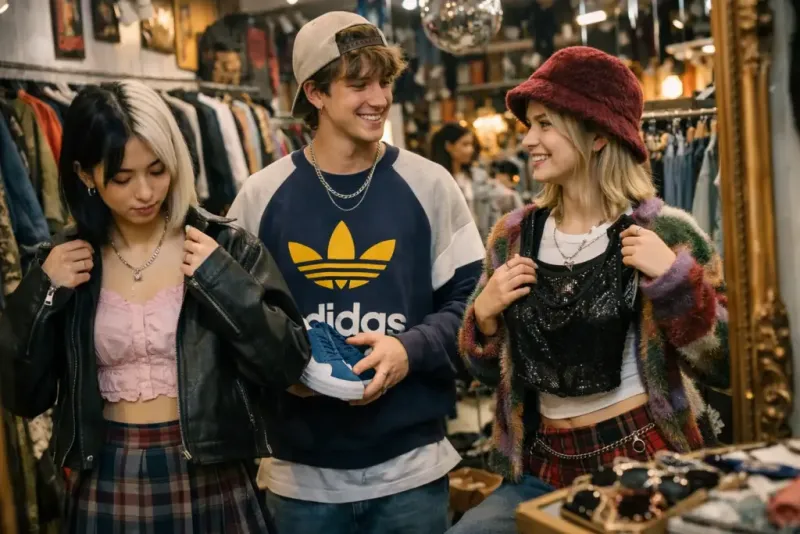
Photo: Gen Z thrift shopping vintage clothing streetwear mix high fashion, via truekung.com
Not too long ago, the fashion power move was simple: wear the logo, flex the price tag, repeat. A Supreme box logo hoodie. A pair of Off-White Jordans. A Gucci belt worn so high on the waist it practically screamed its own price point. Status dressing had a formula, and for a hot minute, it worked.
Then Gen Z got TikTok, discovered Depop, and set the whole system on fire.
What's happening in fashion right now isn't just a trend cycle shift — it's a full-on cultural reckoning. Younger consumers, many of them barely old enough to remember the peak hype beast years, are rewriting what it means to look expensive. And spoiler: it has almost nothing to do with how much you spent.
The Algorithm Changed Everything
TikTok's fashion ecosystem is unlike anything that came before it. Instagram rewards aspiration — polished grids, filtered perfection, influencer deals that feel increasingly fake. TikTok rewards personality, creativity, and most importantly, the story behind the fit.
A 19-year-old in Columbus, Ohio thrifting a barely-touched Vivienne Westwood blazer for $12 at a church sale, then styling it with vintage Levi's and a pair of New Balance 574s? That's a viral moment. That's content. That's the new luxury flex.
The "thrift haul" format exploded not just because it celebrates bargain hunting, but because it democratized taste. You don't need a trust fund or a Soho House membership to have an incredible wardrobe anymore. You need patience, a good eye, and the confidence to mix eras and price points without apology.
Logo Fatigue Is Real
Here's the thing nobody in the legacy fashion world wants to admit: the logo-obsessed aesthetic got exhausting. When every fast fashion brand started slapping its name across everything in sight, the original signal — I can afford this — lost all its meaning. Suddenly a $30 SHEIN knockoff looked nearly identical to a $300 original. The logo stopped working as a status shorthand.
Gen Z clocked this fast. Instead of chasing logos, they started chasing craft. Interesting construction. Rare vintage pieces. Dead-stock finds. The appreciation shifted from "how much did this cost" to "where did you even find that?"
That's a fundamentally different value system, and it's reshaping the entire market from the bottom up.
Brands Are Scrambling — and Some Are Adapting
The luxury establishment is paying attention, even if it's doing so nervously. Brands like Balenciaga and Bottega Veneta have leaned hard into anti-logo minimalism. Maison Margiela's Tabi boots have become the unlikely Gen Z status shoe precisely because they're weird, polarizing, and require actual fashion knowledge to appreciate — no giant logo required.
On the other end of the spectrum, heritage brands are leaning into their archive culture. Ralph Lauren has been quietly brilliant at this, tapping into nostalgia for '90s vintage Ralph that thrift shoppers have been hyping for years. They're not fighting the thrift wave — they're surfing it.
Then there are the brands getting it completely wrong, releasing "thrift-inspired" collections that feel cynical and hollow. Gen Z has an incredibly well-calibrated authenticity detector, and they will absolutely call it out. In real time. With a sound bite and a trending hashtag.
The New Luxury Equation
So what does luxury actually mean in 2024's fashion landscape? The answer is more interesting than anything a brand marketing team could engineer.
Luxury is now about knowledge — knowing that the boxy blazer you found is actually a '90s Donna Karan, not just some random thrift score. It's about effort — the hunt, the research, the patience it takes to build a wardrobe that actually reflects who you are. And it's about individuality — the ability to put together a look that nobody else is wearing, that can't be replicated with a credit card.
A $6 silk blouse from Salvation Army styled with a $900 Toteme trouser and $40 vintage loafers? That's the fit. That's the energy. That's the new flex.
What This Means for the Rest of Us
If you're not part of Gen Z but you've been watching this shift with a mix of admiration and mild anxiety, here's the good news: this cultural moment is genuinely inclusive. You don't have to be 22 to participate in the thrift-and-style revolution.
Start by actually visiting your local thrift stores — not just browsing Depop (though Depop is great). Get physical with the racks. Learn to spot quality fabric. Research designers you're unfamiliar with. Follow creators on TikTok who are doing the mixing-and-matching thing well, not to copy them, but to train your eye.
And maybe let go of the logo security blanket. The most interesting wardrobes right now aren't announcing their price tags. They're asking you to look closer, think harder, and appreciate the story.
That's a fashion revolution worth showing up for.