The Less-Is-More Lie: How Brands Hijacked Minimalism to Sell You More Stuff

Somewhere between your third scroll through a "10 Pieces, Infinite Outfits" TikTok and your second trip to the donation bin this season, a brand made money off your desire to own less. That's not a conspiracy theory — that's the capsule wardrobe economy working exactly as intended.
Minimalism as a lifestyle concept has been around long enough to feel like wisdom. But minimalism as a marketing strategy? That's a newer and considerably more profitable beast. And right now, it's running the fashion industry's most convincing con.
From Zen Philosophy to Checkout Cart
The modern capsule wardrobe pitch goes something like this: clear out the clutter, identify your "true" style, and invest in a curated collection of timeless, high-quality pieces. It sounds like an antidote to overconsumption. In practice, it's often a permission slip for a very specific kind of shopping spree.
"The genius of capsule wardrobe culture is that it reframes buying as editing," says sustainable fashion critic and writer Dana Osei, who has spent years tracking how wellness language infiltrates retail. "You're not shopping — you're curating. You're not spending — you're investing. The vocabulary does a lot of heavy lifting."
And brands have absolutely caught on. Everlane, Quince, Cuyana, and a rotating cast of direct-to-consumer labels have built entire identities around the idea that their pieces are the ones worth keeping. Their marketing doesn't say "buy more" — it says "buy better." But the end result, for many consumers, is a closet full of $90 white tees and $180 straight-leg trousers that feel just as cluttered as what they replaced.
The Declutter-to-Purchase Pipeline
Here's where the trap gets mechanical. The average American owns somewhere between 77 and 100 pieces of clothing at any given time, according to research from the American Apparel and Footwear Association. Minimalism content — YouTube hauls, Instagram flat lays, Pinterest boards titled "capsule wardrobe fall 2024" — typically suggests the ideal number sits closer to 30 to 37 pieces.
That gap is the sales opportunity.
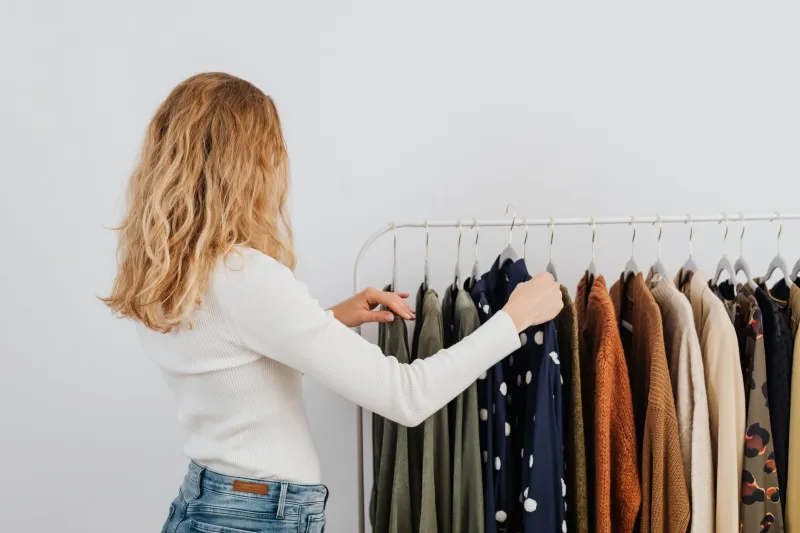
When you purge two-thirds of your wardrobe based on a content creator's checklist, you're left with "gaps" that need filling. Suddenly you need a camel coat. You need a white button-down that actually fits. You need the perfect dark-wash jean. The minimalism framework doesn't reduce your shopping trips — it redirects them toward higher price points and a more specific (brand-endorsed) aesthetic.
"It's not that minimalism is bad," Osei clarifies. "It's that the commercial version of minimalism was designed to feel like a philosophy while functioning like a funnel."
Data backs this up. A 2023 report from the secondhand platform ThredUp noted that while resale grew significantly, primary retail purchases among "sustainable" shoppers actually increased — because decluttering created the psychological space and the perceived moral license to buy again. Researchers sometimes call this the "moral licensing effect": doing something virtuous (donating old clothes) makes people feel entitled to a reward (buying new ones).
The 'Essentials' Industrial Complex
Pull up any major retailer's website right now and search "essentials." Go ahead. You'll find hundreds of results — sometimes entire sub-brands built around the word. Amazon Essentials. Gap's "Essential" tees. J.Crew's "forever" pieces. The language signals permanence and necessity, which is a remarkable thing to communicate about an industry that runs on seasonal turnover.
The word "essential" is doing enormous work here. It implies that without this particular $65 ribbed tank or $220 wool blazer, your wardrobe is somehow incomplete. It creates artificial urgency without a sale tag. And it targets exactly the consumer who has already bought into the minimalist mindset — someone who is trying to be intentional but has been handed a curated list of "must-haves" by the very brands profiting from their intentionality.
Sustainable fashion advocate and educator Priya Mehta, who runs workshops on conscious consumption in Chicago, sees this play out constantly with her clients. "People come to me after a big closet purge feeling proud, and then they immediately start listing everything they think they need to replace. Nine times out of ten, that list came directly from brand content they consumed during the declutter process. The brands are in the room with you while you clean out your closet."
Who the Minimalism Aesthetic Actually Serves
There's also a class dimension worth naming. The capsule wardrobe ideal — neutral tones, quality fabrics, investment pieces — is expensive to build from scratch and implicitly coded as aspirational. The aesthetic is overwhelmingly white, slim, and upper-middle-class in its visual presentation. Brands selling into this space aren't marketing to everyone; they're marketing to a demographic that has both the disposable income to "invest" and the cultural capital to recognize the references.
For working-class consumers and communities of color who have always practiced a form of intentional dressing out of necessity rather than trend, the minimalism rebrand can feel particularly hollow. "My grandmother had a capsule wardrobe before it had a name," says Mehta. "She just called it getting dressed. Nobody was selling her a course on it."
The aestheticization of "buying less" — complete with linen backdrops, morning light photography, and $400 ceramic mugs in the frame — transforms a practical necessity into a luxury lifestyle. And luxury lifestyles, almost by definition, require ongoing purchases to maintain.
How to Actually Opt Out
None of this means you should abandon the idea of a more intentional wardrobe. Owning fewer things you genuinely love is a legitimate goal. But the path there probably doesn't run through a brand's "starter kit" or a content creator's affiliate link.
A few things worth keeping in mind:
Audit the content you're consuming. If a minimalism influencer has a shop tab or an Amazon storefront, their decluttering advice comes with a financial incentive. That doesn't make it wrong, but it's worth knowing.
Resist the gap-filling urge. After a purge, sit with your wardrobe for at least one full season before buying anything new. You'll quickly learn what you actually miss versus what a checklist told you to miss.
Reject the "essentials" framing. Your essentials are whatever you actually wear. They don't have to be neutral, expensive, or sourced from a brand that uses the word "timeless" in its About page.
Buy secondhand when you do buy. The resale market — Poshmark, ThredUp, Depop, your local thrift circuit — is where the minimalism philosophy actually lives up to its promise. Less waste, lower cost, no brand mythology required.
The closet cleanse can be genuinely liberating. Just make sure you're the one holding the bags at the end — not handing them straight to a retailer's next campaign.