Plain Is the New Flex: How Luxury Fashion Fell in Love With Looking Broke
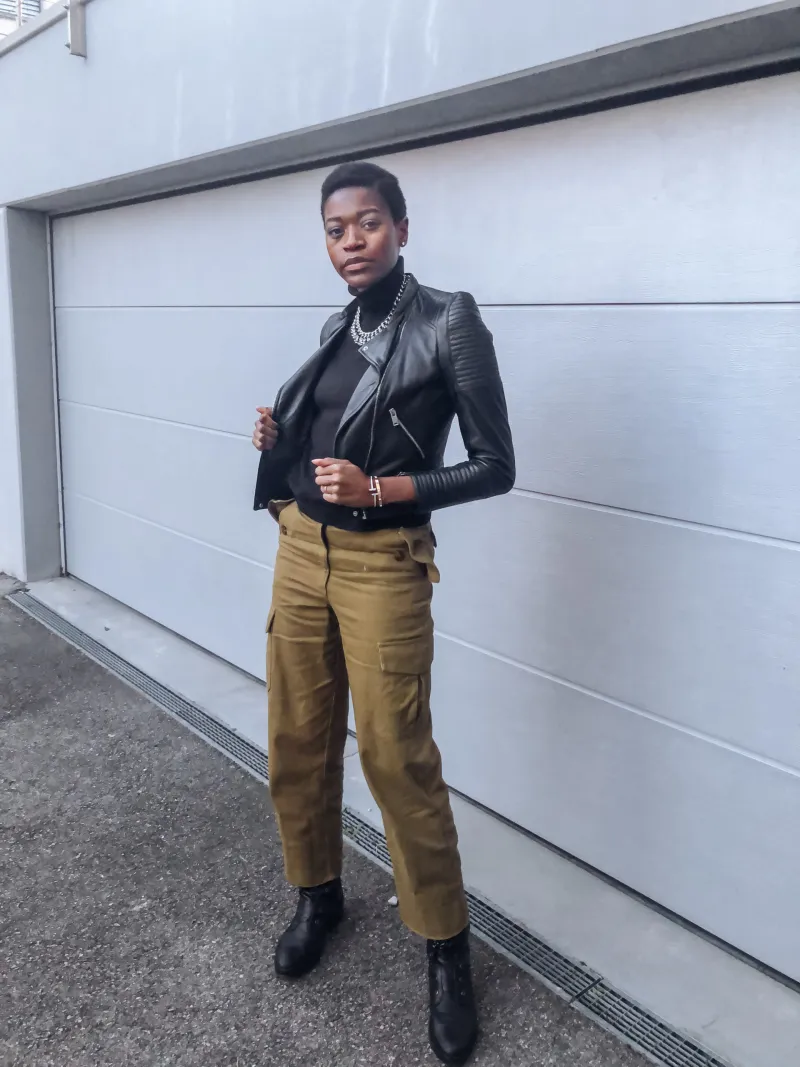
Photo: minimalist utilitarian fashion workwear jacket urban street style, via tallfashionblog.com
There's a jacket sitting on a rack at a Bottega Veneta pop-up right now. It's beige. It's boxy. It has no visible logo, no dramatic cut, no architectural moment. It costs $3,200. And it looks — genuinely, deliberately — like something your uncle wears to a Home Depot run.
Welcome to fashion's most confusing era yet.
Somewhere between the death of logomania and the rise of the "quiet luxury" conversation, something even weirder happened: the industry's most powerful houses stopped trying to look expensive and started trying to look ordinary. Not accidentally ordinary. Intentionally, meticulously, expensively ordinary. The kind of ordinary that takes a design team six months to perfect.
From the Runway to the Break Room
If you watched the menswear shows coming out of Paris and Milan over the last two seasons, you noticed a pattern. Oversized canvas jackets that read Carhartt from twenty feet away. Straight-leg trousers in undyed cotton. Chunky rubber-soled boots that could pass for safety footwear. Fleece pullovers that looked like they came with a name tag.
Loewe, Lemaire, Jil Sander, and even some of the more adventurous corners of the Kering portfolio have all leaned hard into what critics are calling the "utilitarian turn." The fabrics are premium — Japanese selvedge, washed Belgian linen, heavyweight ripstop — but the silhouettes and colorways are aggressively unremarkable. Earth tones. Functional pockets that actually work. Waistbands with real elastic.
This isn't minimalism in the old Calvin Klein sense, where the goal was sleek restraint and sculptural simplicity. This is something closer to anti-fashion fashion — clothes designed to signal that you are so far above the status game that you've circled back around to looking like you work at a distribution center.
The Streetwear Debt Nobody's Talking About
Here's what the fashion press tends to gloss over: this whole aesthetic didn't originate in some Parisian atelier. It came up through American streets, specifically through the workwear-influenced style that's been moving through Black and Latino communities in cities like Detroit, Chicago, and Houston for years.
Carhartt, Dickies, and Timberland weren't "discovered" by luxury fashion. They were already culture. Working-class and working-poor communities wore these pieces because they were built to last, because they were affordable, and because they looked good doing it. The fit was always there. The cool was always there. The difference is that now Balenciaga is charging $1,800 for a version of what you could cop at a farm supply store for $65.
That tension — between the aesthetic's roots and the price tags being slapped on its descendants — is a conversation worth having. But what's undeniable is that the creative energy flowing upward from street-level dressing into high fashion has never been more visible.
Why the Wealthy Want to Look Like Everyone Else
So what's actually driving this? Why are the consumers with the most money suddenly paying to look like they have none?
Part of it is backlash. The maximalist, logo-saturated era of the mid-2010s — the Gucci belt buckle on every Instagram grid, the Supreme drops that turned grown adults into campsite dwellers — burned a lot of people out. There's a generation of high earners who associate visible branding with trying too hard, with insecurity dressed up as confidence.
But there's also something more specifically tied to the social media moment. When everyone has access to a camera and a platform, standing out has become democratized in a way that makes it almost meaningless as a status signal. The new flex isn't being seen — it's being recognized. Wearing something that looks plain to most people but signals deep, insider knowledge to the right eyes? That's the contemporary power move.
It's the fashion equivalent of ordering off-menu. The point isn't the food. It's that you knew to ask.
The Knowledge Gap as Status Symbol
There's a term that's been floating around fashion circles for a while now: "stealth wealth." The idea that true affluence expresses itself through restraint, through the absence of obvious markers rather than their presence. Old money aesthetics, basically, filtered through a 2024 lens.
But normcore utilitarianism takes that concept somewhere stranger. It's not just about avoiding logos. It's about actively courting the appearance of the mundane. The $400 tote bag that looks exactly like a grocery bag. The $900 sweatpants cut from Italian fleece that read, at a glance, like a Walmart purchase. The status is buried so deep that it becomes almost private — a secret between the wearer and whoever is paying close enough attention.
For some consumers, that's the whole point. In an era of relentless oversharing and constant visibility, wearing something that requires genuine fashion literacy to appreciate feels like an act of quiet rebellion.
What This Means for the Rest of Us
Here's the thing, though: you don't need to spend thousands to participate in this aesthetic. The actual workwear pieces that inspired these runway looks are still out there, still affordable, still built to last. A well-worn Dickies jacket, broken-in work boots, straight-leg chinos in a neutral — that's the whole mood, and it costs maybe $150 if you shop smart.
The irony is rich, and fashion loves irony right now. The most expensive clothes are cosplaying as the cheapest ones, and the people who actually wear the originals are, whether they know it or not, ahead of the curve.
That's always kind of been how this works. The streets set the tone, the industry takes notes, and somewhere in the middle, a $3,200 beige jacket ends up on a rack next to a sparkling water station at a pop-up in SoHo.
Your uncle, meanwhile, has been wearing the original since 1987. He just never got the credit.