No Gatekeepers, No Problem: The TikTok Designers Crashing Fashion Week From the Outside In
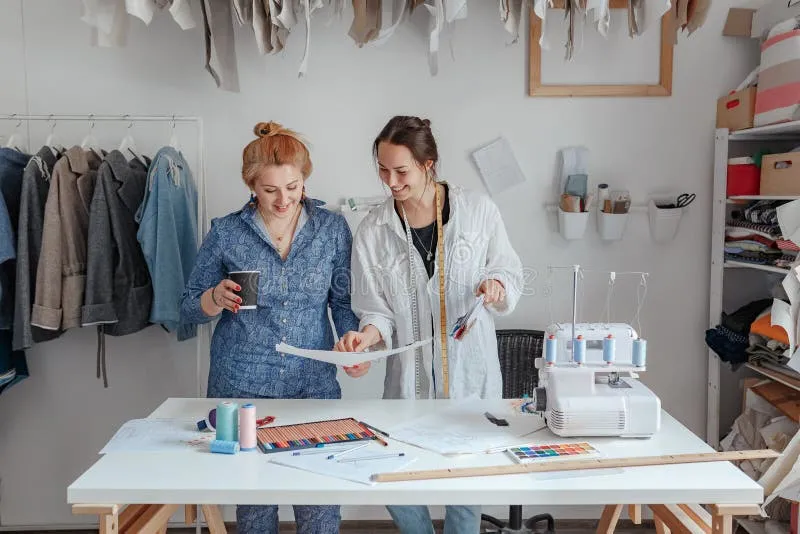
Photo: young independent fashion designer sewing studio behind the scenes creative workspace, via thumbs.dreamstime.com
Picture this: a 23-year-old in a rented studio apartment in Atlanta, cutting fabric on a dining room table, posting process videos at 2 a.m., and waking up to 40,000 new followers. No fashion school degree. No industry connections. No PR agency. Just a point of view, a ring light, and an audience that gets it immediately.
This isn't a fairy tale. It's Tuesday for a growing class of indie designers who are rewriting the rules of how fashion brands get built — and in doing so, making traditional Fashion Week feel increasingly like a conversation happening in a room nobody under 30 really wants to be in.
The Old Playbook Is Officially Expired
For decades, breaking into fashion meant navigating a very specific gauntlet. FIT or Parsons. An internship at a house where you'd spend two years steaming other people's garments. A lucky connection. A small collection shown to buyers who may or may not care. A review in WWD that could make or break you before your first real customer ever touched your work.
That path still exists. It still produces talented designers. But it also produces a certain kind of sameness — a filtering process that tends to reward people who can afford the cost of entry and know how to speak the language of an industry that has historically been very selective about who it lets in.
TikTok didn't just offer an alternative. It obliterated the logic of the old model entirely.
"The audience found me before any buyer or editor ever did," says Jordan Myles, a 25-year-old womenswear designer based in Chicago who launched their brand, Tender Structures, after a behind-the-scenes fitting video went viral in 2022. "By the time I was ready to sell anything, I had 80,000 people who already cared. That changes everything about how you can build a business."
Building the Brand Before the Brand Exists
What separates TikTok-native fashion brands from legacy houses isn't just the origin story — it's the sequence. Traditional fashion runs on a reveal-and-sell cycle: design in secret, show dramatically, sell to retailers, hope the consumer eventually encounters the product. The community, if it develops at all, comes later.
Independent social-media-born designers invert this completely. The community comes first. Followers watch the process — the sketches, the sourcing trips, the fitting adjustments, the failures. By the time a collection drops, it's not a reveal. It's a payoff for an audience that's been emotionally invested for months.
This model creates a loyalty that no amount of traditional marketing spend can replicate. When Camille Osei, a Brooklyn-based knitwear designer who goes by @camille.makes, released her first structured cardigan drop last spring, it sold out in 11 minutes. She'd spent three months documenting the development process, including a full video on why she chose a specific gauge of Peruvian highland wool. Her followers didn't just buy a cardigan. They bought the story they'd been living alongside.
"Legacy brands spend millions trying to create emotional connection," says Priya Nair, a fashion industry analyst who tracks emerging labels for a boutique consulting firm in New York. "These creators have it organically because they never hid behind a brand persona. They just were the brand from day one."
Fashion Week Isn't the Goal Anymore
Here's what's quietly radical about this generation of designers: most of them don't actually want to show at New York Fashion Week. Not because they can't — some have been invited, or could get there — but because the format doesn't serve what they're building.
A 20-minute runway show costs anywhere from $50,000 to several hundred thousand dollars when you factor in venue, production, models, hair, makeup, and PR. For a brand doing direct-to-consumer drops to an engaged social audience, that math makes almost no sense. The return on investment in audience attention is simply higher elsewhere.
Some designers are creating their own versions of the spectacle instead. Intimate studio shows streamed live to TikTok. Lookbook drops that function as short films. Pop-up events in cities like Atlanta, Chicago, and LA that feel more like community gatherings than traditional presentations. The energy is less "industry event" and more "house party where everyone's dressed incredibly well."
"Fashion Week was designed for buyers and press," Jordan Myles points out. "My buyers are my followers. My press is my comments section. I don't need to rent a venue in the Meatpacking District to reach them."
The Business Model Is Different — By Design
Beyond the marketing, the actual business architecture of these indie labels diverges sharply from legacy fashion houses. Where traditional brands operate on wholesale margins, seasonal inventory risk, and retail partnerships, TikTok-native designers tend to run leaner, more responsive operations.
Small-batch production, made-to-order drops, and limited releases eliminate the overstock problem that has plagued the industry and contributed to a staggering amount of waste. Pre-order models let designers gauge demand before cutting a single piece of fabric. The result is a business that's often more financially sustainable at a smaller scale than a traditional brand trying to grow into the industry's infrastructure.
There are real challenges, too. Supply chain management, scaling production without losing quality, navigating intellectual property when your designs are instantly visible to the entire internet — these are genuine obstacles. But the designers navigating them are doing so with a resourcefulness and adaptability that fashion school curricula haven't quite caught up to.
Gen Z as the New Authority
Maybe the most significant disruption here isn't the business model or the platform. It's the shift in who gets to define what matters in fashion.
For most of fashion history, authority flowed downward — from houses to editors to stylists to consumers. Taste was handed down. The new model is peer-to-peer. When a 22-year-old in a YouTube comment section can articulate why a seam finish is exceptional, or when a TikTok community collectively decides that a particular indie label represents something true about how they want to dress, that's a different kind of cultural authority. It's distributed. It's earned in real time. And it doesn't care about your masthead.
The gatekeepers didn't disappear. They just became irrelevant to a generation that figured out it could build its own doors.
Fashion Week will keep happening. The tents will go up, the editors will take their seats, and the cameras will flash. But the most interesting story in American fashion right now is happening in the garages and apartments and studio spaces of designers who didn't ask permission — and are building something that might outlast the institutions that never let them in.