Your Mirror Is Snitching: How Fashion Brands Turned Getting Dressed Into a Data Collection Event
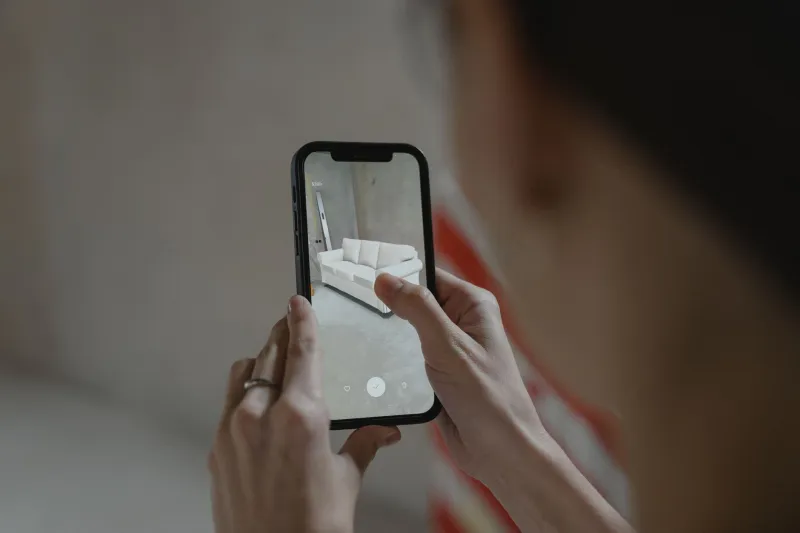
You open the app, hold your phone up, and watch a virtual blazer materialize over your reflection. It feels like magic. It feels like convenience. What it actually feels like — to the algorithm on the other end — is a data point. And then another. And then fifty more before you've even decided whether you like the fit.
Fashion's relationship with consumer surveillance didn't start with TikTok or AI styling tools. But it has absolutely exploded there. Today, the act of getting dressed — something humans have done privately, imperfectly, and emotionally for their entire lives — has been quietly annexed by a corporate intelligence apparatus that fashion brands are spending hundreds of millions of dollars to build and refine.
The Try-On App Is Not Your Friend
Virtual try-on technology sounds like a win for everybody. No more guessing whether that midi skirt is going to hit at the right spot. No more size chart roulette. Brands like Zara, Nike, and a growing list of DTC labels have rolled out augmented reality fitting tools that let you "see" clothes on your body before you buy.
But here's what the press releases leave out: those sessions are being recorded, analyzed, and fed into behavioral models that go way beyond helping you find the right pair of jeans.
When you use a virtual try-on feature, you're generating a remarkably intimate dataset. How long did you linger on that jacket before swiping away? Did you rotate the view? Did you zoom in on the waist? Did you try it in three colorways before abandoning the cart entirely? Every micro-hesitation is logged. The brands call this "engagement data." Privacy researchers call it something closer to psychological profiling.
"These platforms aren't just learning what you buy," says one digital privacy advocate who has consulted with retail tech companies. "They're learning how you make decisions, what triggers doubt, and what tips you over into purchasing. That's a fundamentally different kind of knowledge."
Smart Fitting Rooms Are Watching You Work It Out
If the virtual stuff feels abstract, step inside a physical store — because the surveillance infrastructure there has gotten seriously sophisticated.
Smart fitting rooms, already deployed in flagship locations for brands including Ralph Lauren, Uniqlo, and several luxury retailers, are equipped with RFID readers that automatically detect every item you bring in. The room's interface tracks which pieces you tried on, which ones you requested in a different size, and — critically — which ones you walked out with versus which ones you left hanging. Some installations include cameras capable of reading facial microexpressions to gauge emotional reactions to garments.
The pitch to consumers is seamless service: tap the mirror, request another size, get styling suggestions without flagging down a sales associate. The pitch to the brand's data team is considerably more revealing. They're building a granular map of the gap between what shoppers want and what they settle for — and that map is extraordinarily valuable for product development, pricing strategy, and targeted marketing.
In the US, the legal framework governing this kind of data collection remains a patchwork. A handful of states have biometric privacy laws with actual teeth — Illinois being the most notable — but federal protections are thin, and most consumers have no real idea what they're consenting to when they tap "agree" on a fitting room touchscreen.
The Algorithm Already Knows You're Underdressed for That Meeting
Social media tracking adds another layer that's harder to see but no less intrusive. Fashion brands invest heavily in social listening tools that monitor not just what you post, but what you engage with, how long you watch certain content, and what aesthetic categories you return to repeatedly.
When you spend forty-five seconds watching a reel about coastal grandmother style and then scroll past a fast fashion haul without pausing, that behavioral signal gets absorbed into a consumer profile attached to your device ID. Brands use this information to serve you ads, yes — but also to time those ads, to calibrate pricing displays, and in some documented cases, to determine whether you're the kind of shopper who responds to scarcity messaging or social proof.
The "personalized recommendations" that show up in your inbox or on your brand app homepage are not curated by a stylish human who gets your vibe. They're generated by models trained on your own behavioral data, cross-referenced with aggregate patterns from millions of users who hesitate the same way you do.
It's less personal stylist, more psychological mirror.
Convenience Is the Con
The reason all of this works — the reason consumers keep opting in — is that the convenience layer is genuinely good. Virtual try-ons do reduce returns. Smart fitting rooms do make the shopping experience smoother. Personalized recommendations do surface things you actually want sometimes.
Fashion brands understand this perfectly. The utility is real, and it's the thing that gets you through the door — both literally and digitally. What's buried in the fine print is the extent to which that utility is being funded by your behavioral data, your body data, and your emotional responses to clothing.
There's something particularly pointed about this happening in fashion specifically. Getting dressed is one of the most personal things people do. It's tied to identity, to mood, to how we want to be seen in the world. For a lot of us — especially in communities where style has always been a form of self-determination — the closet is a private space in a real psychological sense.
Turning that space into a corporate data collection event, wrapped in the language of personalization and empowerment, is a move worth scrutinizing.
So What Do You Actually Do With This?
You're probably not going to stop using try-on apps entirely. Neither are we. But there are some moves worth making.
First, get curious about the permissions you're granting. Most try-on features request camera access — which is expected — but some apps bundle in location data, contact access, and persistent tracking that has nothing to do with helping you find a shirt. Read the permissions screen before you tap accept.
Second, check whether your state has biometric data protections. Illinois, Texas, Washington, and a growing number of states have laws governing how companies can collect and store biometric information. If you're in one of those states, you may have rights you're not currently exercising.
Third, consider the data economy you're participating in. Every time a brand offers you a "free" styling service or a "personalized" experience, ask what the actual exchange is. Sometimes it's worth it. Sometimes the thing you're trading — your behavioral profile, your body measurements, your decision-making patterns — is worth a lot more than a slightly more accurate size recommendation.
Fashion has always been about image. It's just that now, the image the industry is most interested in is the one it's building of you.